
The Hidden Life of the Good Daughter
Why daughters of difficult or narcissistic mothers feel like impostors- trapped behind a mask.
Many daughters of narcissistic or emotionally difficult mothers grow up feeling like they must be “good” rather than real. This article explores the internal experience of the Good Daughter, including people-pleasing, self-doubt, and the feeling of being an imposter, and how these patterns develop—and can begin to shift.
When a daughter isn’t accepted and supported for who she is, she adapts. This is especially common for daughters of covert and overt narcissistic, borderline, or emotionally difficult mothers, who learn—often without realizing it—to become what they believe their mother needs.
But, in the process, she gives up something essential.
As clinicians, we use terms like complex relational trauma, insecure attachment, fawning, or functional freeze. All of these are accurate. But they don’t quite capture what it feels like to live inside a role instead of an identity.
Hell is still hell, even with a full face of makeup.
What It Feels Like to Be the “Good Daughter”
You might miss her if you don’t know what to look for.
She wears a beauty-queen smile—camera-ready, polished, and reassuring. It says, I’m fine. Perfect, in fact. Why would you ask?
But if you look more closely, you’ll notice something is off. There is very little ease in that smile. It is more controlled than joyful, more disciplined than relaxed. It is designed to please you, not to express her.
Behind it, something else is going on.
She has learned to be good instead of real.
If she could speak from behind that mask, she might tell you something like this:
“I would rather keep up the facade than let you see what’s really going on. The truth is, it’s all an act. I’m anything but perfect.
I look like I’m good with people, but I don’t really trust them. I explain myself when I don’t need to. I apologize when I haven’t done anything wrong. It feels safer to get out ahead of criticism than to wait for it.
You might wonder how I got this way.
I’m a good student. I’ve been trained by the best… and I’ve learned well.”
Ask her what it was like growing up, and she might say:
“In my house, we had a saying—if Momma ain’t happy, ain’t nobody happy. And it wasn’t just a saying. It was the rule.
If she wasn’t okay, it was my job to fix it.
There wasn’t much room for me to feel anything other than okay. So I learned to be okay… even when I wasn’t.
If I did complain, I was told I was too sensitive. So I stopped complaining. I learned to pretend instead.”
Why doesn’t she just tell her mother how she feels?
If I stand up to my mother, she will make me pay, and pay dearly. She might choose to beat me down with criticism. She won’t stop until I collapse in exhausted defeat.
Or she caves into a heap of tears and makes me regret ever bringing it up in the first place.
You see there is no way to win. Either way, I lose. Either I feel defeated or guilty.
As a consequence, my real self is buried here underneath this mask. I might look alive, but honestly, I feel dead inside.”
Over time, her real self gets pushed further and farther out of reach.
“I might look alive on the outside, but inside I feel like I’m disappearing.
“Everyone says I am a “good” daughter. They don’t know what it costs me. When I’m not good, my real self threatens to break through. It is safer to be put on a good show and not let anyone see the real me.
It feels safer to keep the mask in place.
No wonder I feel like an imposter in my own life.”
Success doesn’t resolve this.
“When I do well—get the grade, land the job, hold everything together—I don’t feel proud. I feel exposed, like I’ve fooled everyone, and I’m about to be found out.
I’m always waiting for someone to see behind the act.
Sometimes I try to manage it by controlling myself—what I eat, how I look, how I perform. If I can just stay ahead of it, I can quiet the voice that tells me I’m not enough.
But it never really goes away.”
From the outside, she may look like she has everything together.
Inside, she is often profoundly alone.
“People think I’m nice. They think I have
it all handled. But no one really knows me.
And I’m not sure they would like me if they did.”
“I can never let my guard down, not completely. If my teachers or boss could see behind my act, they would see what a loser I really am. They would know I eat a carton of ice cream and then go for a 5-mile run to stop the critical voices inside my head.
Those friends who think I have it all together would see I measure whether it is a good or bad day, or by the number that registers on my bathroom scale.
I don’t leave the house without my makeup. I need the mask.
Why she stays trapped?
“I feel like one of those Disney characters—smiling and waving on the outside while sweating inside the costume.
The difference is, I can’t take the costume off.
And it isn’t even my fantasy. It’s hers. I’m just playing a part in it.”
There is anger there, too, but it doesn’t land cleanly.
“Sometimes I feel furious with her. Resentful.
But as soon as that feeling comes up, guilt follows right behind it.
She had a hard life. Harder than mine. I can see that.
I don’t want to hurt her.
And that’s the trap.”
At some level, she understands the bind she is in:
“It feels like it’s her happiness or mine.
Her mother may, at times, seem pleased.
“She beams when I’m doing well—getting the grades, winning something, looking the part- her plastic doll.
But it doesn’t last.
The moment I stop performing, the criticism starts again.
It’s exhausting. And it never ends.”
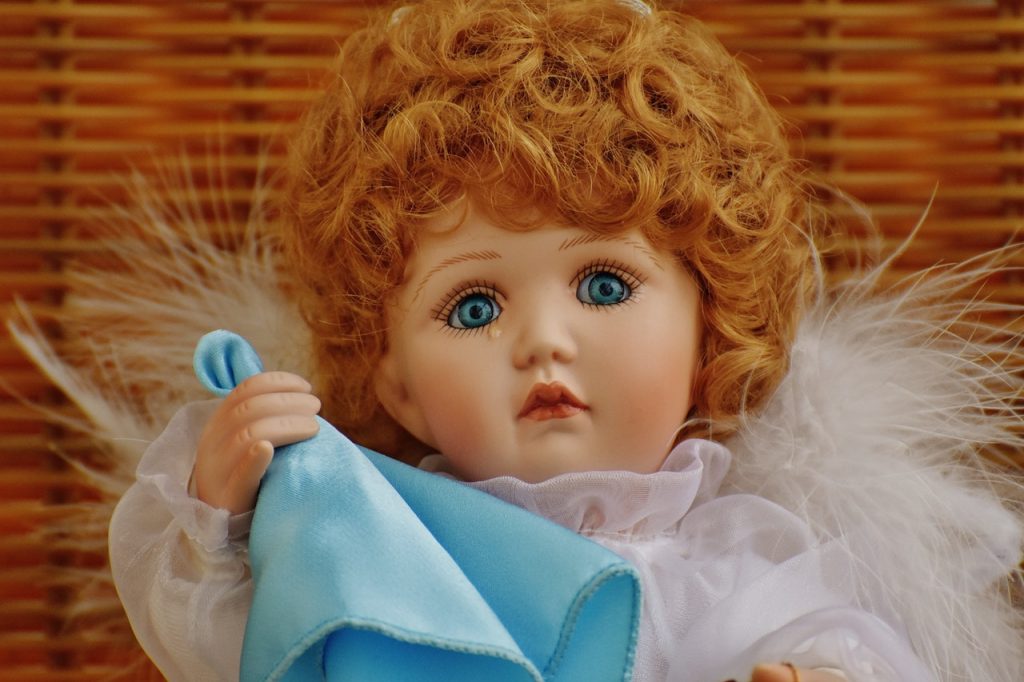
Over time, this pattern shapes how she moves through the world.
She becomes highly attuned to other people’s moods, often mistaking this hypervigilance for love.
She feels responsible for how others feel, especially her mother.
She learns to suppress her own needs in order to maintain emotional stability in the relationship.
Because her sense of self has been organized around someone else, separating—emotionally or physically—can feel like a threat to her own security.
She may look capable and high-functioning, but she is often flooded with self-doubt at the slightest criticism and struggles with persistent imposter feelings.
She may pull back when someone gets too close, afraid she will be exposed as not enough, or choose partners who need her to mirror them, repeating a familiar dynamic.
She may be surrounded by people and still feel profoundly alone.
The Deeper pattern
When a child has to adapt this way, she doesn’t just lose connection to her mother—she loses connection to herself.
For emotional survival, she disconnects from her own feelings and learns to orient toward someone else’s.
Over time, this becomes her default.
Her successes can feel like both a pedestal and a prison. Every achievement raises the stakes, and every misstep feels like proof that she was never enough to begin with.
She doesn’t learn how to fail and recover. There is no middle ground.
Finding Her Way Back
The most important thing she needs to know is this:
Her real self is not gone.
It has been buried, not erased.
The stifled anger, at last, given a voice, can free her from the shackles of living inside a false self. Plugging back into the current of her true range of feelings—not merely the “nice” ones—can energize her passion and creativity.
With that energy, she may finally be able to shake off the shame, claim her true feelings, and find her way back home—to her essential self.
Those feelings are not the problem.
They are the signal.
As she begins to recognize them, name them, and allow them, something shifts. The energy that once maintained the mask can begin to fuel something else—clarity, creativity, a sense of direction that belongs to her.
Over time, she can begin to separate who she is from who she had to be.
She can reclaim her voice.
And in doing so, she begins to come back to life.
Final Thought
Living for your mother may once have been necessary.
But it is no way to live a life.
Was this or something close to it… your story

To find out if you suffer from the Good Daughter Syndrome, go here.


I’m married to the Good Daughter. I would not wish her existence on my worst enemy. Fortunately, she is in therapy now, and I think that she’s got a very good chance of seeing a better life one day. It has taken hard work so far, and I expect that it will take hard work for years to come. I just wish that she could know that the effort is worth it, and that a happy existence is an extremely worthwhile goal.
In order for us to have gotten where we’re at today, I had to reach rock bottom myself. With the help of a (different) great therapist, I was able to start to understand the dynamics that were affecting our relationship and my own thoughts and behaviors. Not fun, but worth it.
To all those Good Daughters out there: you’re worth it. You are beautiful, intelligent, capable, and strong. Try to never forget that!
I want to thank you so much for writing. It looks like your wife has a wonderful ally in you. Don’t ever underestimate your role in helping her get free. She will need your strength and steadiness to make the changes she needs to make. I think the damage this “good” daughter syndrome does to partners is tremendously underestimated if not ignored completely. Stay tuned to this blog as I plan on wrting more about the negative effects on the marriage &/or parternership. I think it helps couples realize just what is at stake if left unchecked. You have given it voice here and I thank you. My best to you and your wife as you battle this. I am putting my faith in you both!
Thank you to Charles and his comment above supporting his wife . What a kind man. Also Katherine thank you for these blogs and videos- they’re very enlightening . I would be commenting on each one if I had more energy , but it takes everything I have just to focus and gather my thoughts these days . Being the good daughter has slowly accumulated a weight of heaviness over the years that is hard to bear. But I have hope, that slowly , bit by bit the burden is being lifted by new knowledge that has opened up to me about my mother’s narcissistic ways . I hope to gain my creativity and freedom after the healing .
Thank you so much Diana- it hurts my heart to hear how you have suffered from this syndrome. I am warmed by the thought my content has brought you some understanding. Please know- where there is life there is hope. Stay in touch and keep growing and working to break free of this cycle.
I cried reading this. Truth stung my heart like a double edge sword. It all makes sense now. I’m slowly starting to heal from all these deep wounds.
You can’t image how much your comment means to me. I am doing everything I can to bring this often overlooked phenomenon of the ‘good” daughter adaptation to the difficult mother to life. Thank you for your affirmation and keep checking back, I have lots of help and support for you here.
I’ve spent my whole adult life on and off anti-depressants. I’ve completely exhaustied myself trying to fill the emptiness, trying to be good, to the point of break down.
I always knew there was something not right about my mother, but even in therapy I’d talk about everything except her.
I convinced myself that I was just unluckily prone to depression. Two years ago I came across the concept of a narcissistic mother while researching online. I opened the page only to read MY story described by someone I’d never heard of! At 54 years old I suddenly understood the truth! My burden of guilt that had kept the real me in hiding all these years just fell right off as I read the real truth about myself – the good daughter who can never be good enough – I am not to blame, I can learn, understand, forgive and move forward. Two years on I’m happier and more content than I’ve ever been. I have an adult relationship with mother and I am in control of it. Don’t get me wrong, she still has the power to hurt me but now I’m able to walk away, guilt-free, dust myself off and choose how much I interact with her. I thank you Katherine for your great help in this transformation and for the years you have given to this terribly debilitating condition.
I cannot begin to tell you how much this comment means to me. Sometimes as a writer, you don’t know if you are reaching anyone or making a difference. I know in my practice the transformation I see, but online… you can wonder if anyone is listening or if what you have to say is making a difference.
I just know these dynamics are real and that awareness is power.
Good for you that you have taken these realizations into your own life and put them to use! I love it that you have been able to maintain a relationship with your mother- but have taken the reins of control in that relationship. When you know what you are dealing with —it is easier, never easy, but easier LOL. “I am not to blame, I can learn, understand, forgive and move forward.” That is gold to me. Thank you
Great article and thanks for all of your hard work. Important topic that needs to be discussed more.
Thank you so much, Randy. I’m glad it is helpful.
I wonder why it isn’t talked about more. I imagine the good daughters are the ones who are holding it all together at their own expense. Often times their pain is overlooked.
Thanks again for writing.